Cognitive & Neurological
DSIP
🔹 What is DSIP? (Delta Sleep Inducing Peptide) Class: Endogenous neuropeptide—short peptide (tridecapeptide, 9–13 amino acids) naturally produced in the brain and other tissues. Mechanism: Modulates sleep architecture, reduces stress-related hormone activity (cortisol), and may
Updated Nov 22, 2026
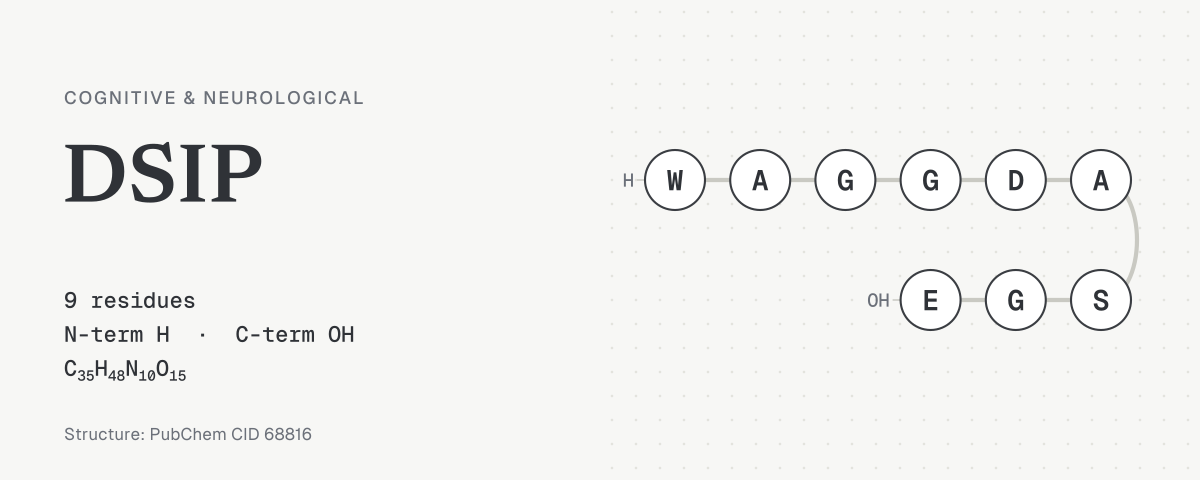
🔹 What is DSIP? (Delta Sleep Inducing Peptide)
Class: Endogenous neuropeptide—short peptide (tridecapeptide, 9–13 amino acids) naturally produced in the brain and other tissues.Mechanism: Modulates sleep architecture, reduces stress-related hormone activity (cortisol), and may influence thermoregulation, pain perception, and mood. Thought to interact with GABAergic and other neurotransmitter systems to promote slow-wave (deep) sleep.
Primary focus: Sleep quality improvement (especially deep sleep), stress reduction, recovery enhancement, potential analgesic and mood-stabilizing effects, and mild neuroprotective properties.
🔹 Oral Dosage (least common)
Range studied/used in research: Oral bioavailability is extremely low; oral administration is largely ineffective.
Typical protocol: No formal oral dosing exists; subcutaneous or intranasal routes are preferred.
Notes: Peptide degradation in the GI tract makes oral use largely impractical.
🔹 Injectable / Sublingual / Intranasal Dosage (most common)
Range: Commonly used at 100–500 µg per dose subcutaneously, intranasally, or sublingually. Some protocols use 1 mg/day split into multiple doses.
Frequency: Typically 1–2 times daily, with evening dosing favored to align with sleep cycles.
Rationale: Direct administration ensures central nervous system access and reliable modulation of sleep-related pathways.
🔹 Cycle Length
Common cycle length: 2–6 weeks is often reported for sleep optimization or recovery purposes.
Off-cycle: Breaks of 1–2 weeks may be used to evaluate tolerance or avoid receptor desensitization.
Note: Limited human research; durations are primarily based on anecdotal and animal studies.
🔹 Optimal Dosing Window
Injectable / Sublingual / Intranasal: Evening or shortly before bedtime is preferred to promote deep sleep. Avoid daytime dosing unless aiming for stress modulation or recovery support.
✅ Educational Integration Example (injectable / intranasal)
Example protocol: 250 µg subcutaneous injection or intranasal dose 30–60 minutes before bedtime for 4 weeks.
Pair with: Sleep hygiene practices, magnesium or GABA support, and stress management for maximal deep sleep enhancement.
🔹 Stacking Strategy (Educational)
Since DSIP primarily targets sleep, stress modulation, and recovery, stacking focuses on enhancing restorative processes and overall recovery:
🔸 Sleep & Recovery Support
- Melatonin or Circadian modulators: Complement DSIP’s sleep-promoting effects.
- Magnesium, GABA, or L-Theanine: Support relaxation and deeper sleep cycles.
🔸 Stress & Mood Optimization
- Adaptogens (Rhodiola, Ashwagandha): Reduce cortisol and support stress resilience.
- BPC-157 or TB-500: Promote tissue repair during enhanced sleep recovery.
🔸 Longevity / Regenerative Health
- NAD⁺ precursors (NMN/NR): Support cellular repair and recovery during deep sleep phases.
- Quality nutrition and exercise: Enhance recovery and GH release during sleep.
Studied in Humans? Yes
FDA Approved? No
Allowed for 503a Compounding Pharmacy? No
Rory's Comment: Thumbs Sideways, works for some, not for others.
Disclaimer: Do not rely on any dosing information provided, this is for educational and research only. Always double and triple check alternative references for education. Please consult with healthcare provider for your specific dosing and protocol if applicable.