Healing, Recovery & Anti-Inflammatory
KPV
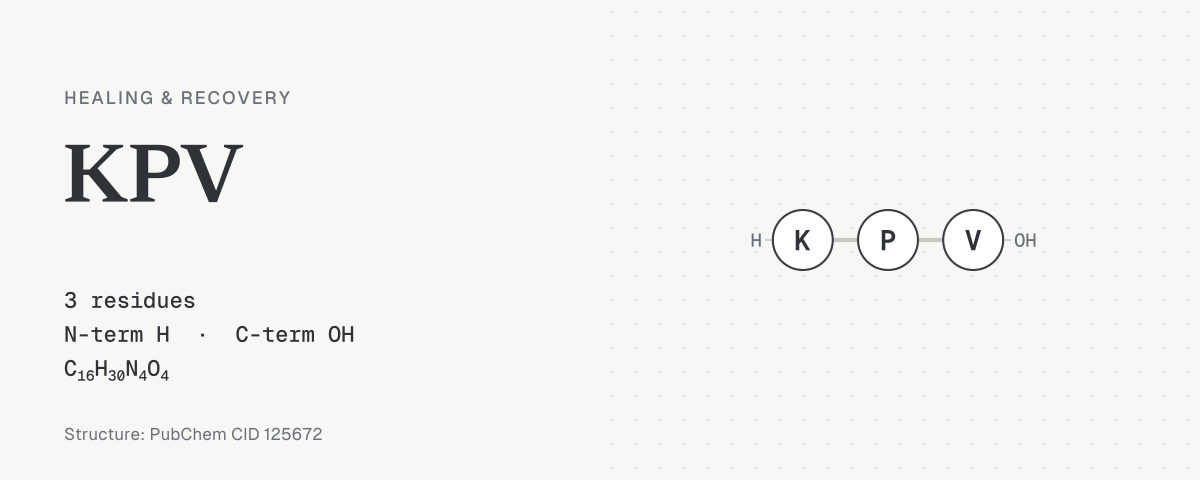
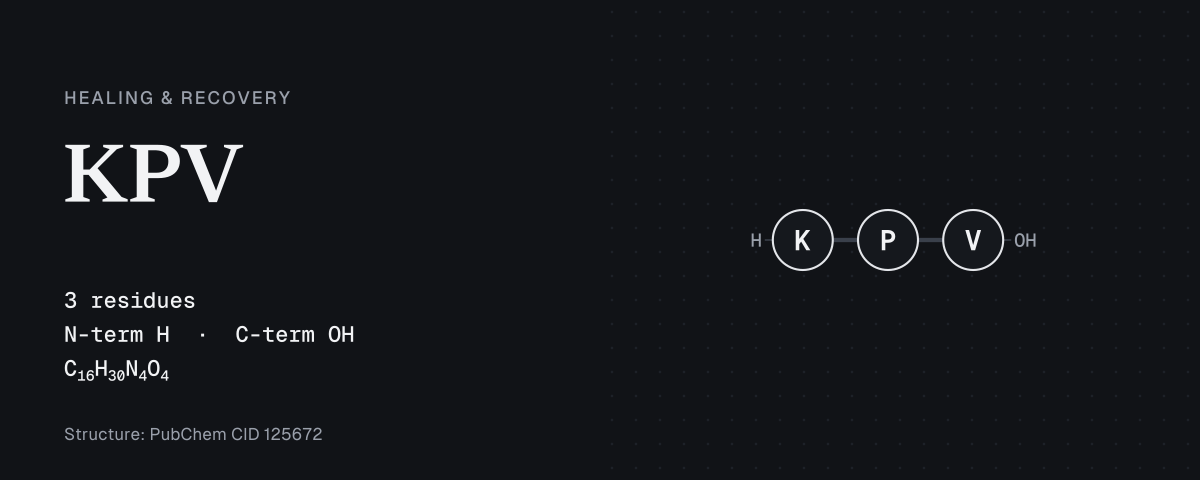
🔹 What is KPV? Class: Tripeptide (Lys-Pro-Val), derived from alpha-Melanocyte Stimulating Hormone (α-MSH). Mechanism: Exhibits anti-inflammatory and immunomodulatory effects via inhibition of NF-κB signaling. Reduces pro-inflammatory cytokine production (TNF-α, IL-6) in tissues.
Updated Nov 22, 2026
🔹 What is KPV?
Class: Tripeptide (Lys-Pro-Val), derived from alpha-Melanocyte Stimulating Hormone (α-MSH).Mechanism:
- Exhibits anti-inflammatory and immunomodulatory effects via inhibition of NF-κB signaling.
- Reduces pro-inflammatory cytokine production (TNF-α, IL-6) in tissues.
- Supports gut health, wound healing, and systemic inflammation control.
Primary focus:
- Anti-inflammatory support, tissue repair, gastrointestinal health, and recovery from chronic inflammation or localized injury.
- Often included in peptide blends for skin, connective tissue, or systemic inflammation reduction.
🔹 Oral Dosage: Not practical; degraded in the GI tract. Only injectable, subcutaneous, or topical administration is effective.
🔹 Injectable / Subcutaneous Dosage (most common)
Range:
- Typical dosing: 250–500 µg per injection, daily or every other day depending on tissue target and severity of inflammation.
Frequency:
- Often administered daily for ongoing anti-inflammatory or healing protocols.
Rationale: Microgram-level dosing is sufficient due to potent anti-inflammatory activity; subcutaneous delivery ensures systemic or local tissue availability.
🔹 Topical Dosage (for localized inflammation or skin health)
- Typical topical formulations: 0.1–0.5% KPV cream or gel applied once or twice daily to affected area.
- May be combined with GH or regenerative peptides (e.g., GHK-Cu, BPC-157) for enhanced local tissue repair.
Notes: Topical application targets local inflammatory pathways, useful for skin, joints, or localized injuries.
🔹 Cycle Length
Common cycle length: 4–8 weeks for anti-inflammatory, regenerative, or gut health purposes.
Off-cycle: 2–4 weeks to assess response and prevent potential receptor habituation.
🔹 Optimal Dosing Window
- Injectable: Morning or evening depending on systemic anti-inflammatory goals.
- Topical: Morning and/or evening for targeted tissue recovery.
✅ Educational Integration Example
- Injectable: 500 µg subcutaneous daily for 6 weeks, followed by 2-week break.
- Topical: 0.25% KPV gel applied to inflamed skin or joint twice daily.
- Can be paired with GH secretagogues, BPC-157, TB-500, or GHK-Cu to support tissue repair and anti-inflammatory synergy.
🔹 Stacking Strategy (Educational / Complementary)
Since KPV is anti-inflammatory and regenerative, complementary stacks focus on tissue repair, systemic inflammation control, and regenerative support:
🔸 Tissue Regeneration:
- BPC-157, TB-500, GHK-Cu: Enhance connective tissue repair and angiogenesis.
- Collagen peptides / Vitamin C: Support extracellular matrix remodeling.
🔸 Systemic Anti-Inflammatory Support:
- Omega-3 fatty acids, Curcumin, NAC: Reduce oxidative stress and cytokine activity.
🔸 GH / Anabolic Support:
- CJC-1295 / Ipamorelin, Hexarelin: Promote tissue repair via GH/IGF axis, synergizing with KPV’s anti-inflammatory effects.
Rationale: KPV reduces local and systemic inflammation, enhancing the efficacy of regenerative and anabolic peptides while improving tissue repair outcomes.
Studied in Humans? No
FDA Approved? No
Allowed for 503a Compounding Pharmacy? No
Rory's Comment: Thumbs Up
Disclaimer: Do not rely on any dosing information provided, this is for educational and research only. Always double and triple check alternative references for education. Please consult with healthcare provider for your specific dosing and protocol if applicable.