Cognitive & Neurological
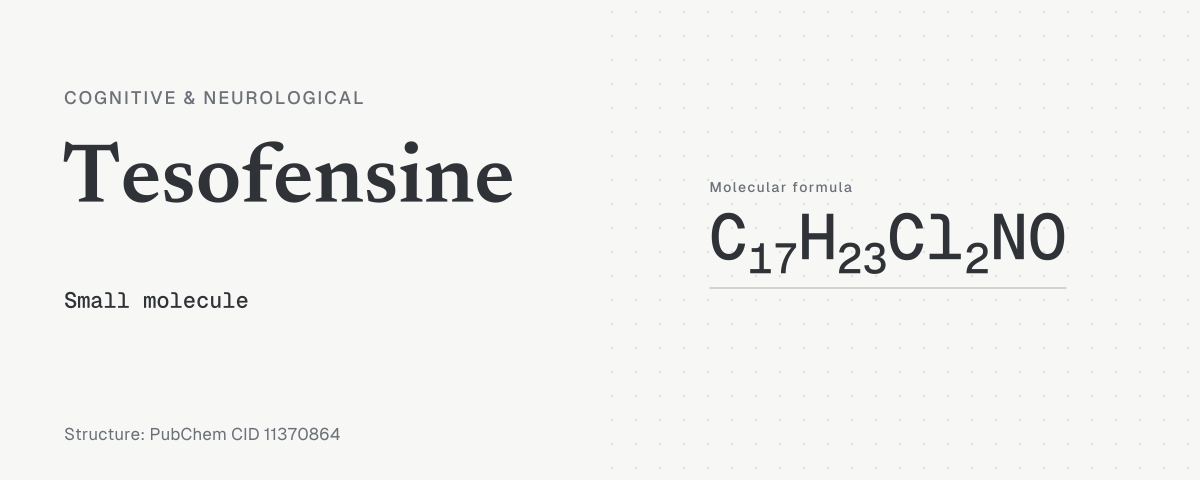
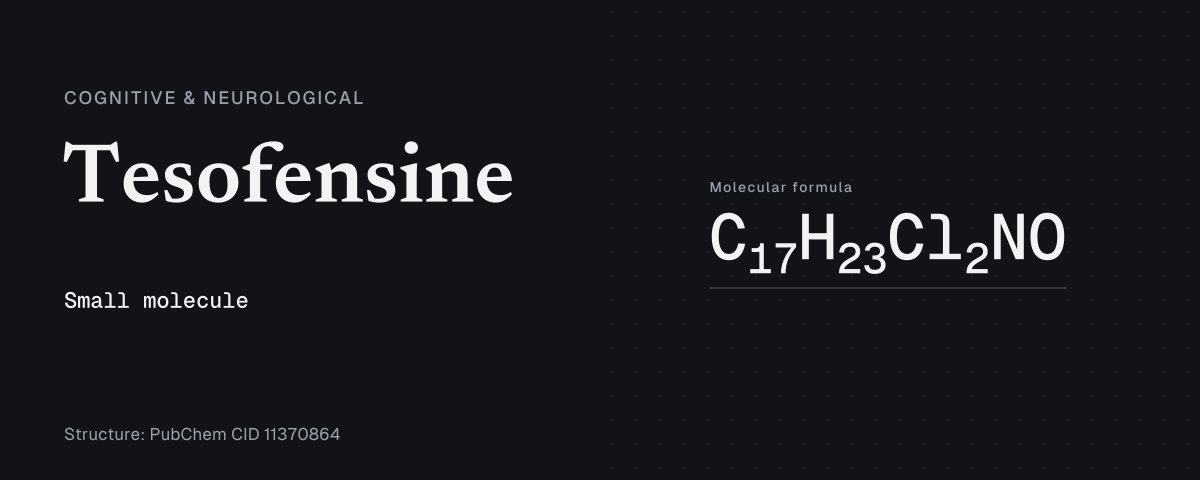
Tesofensine
🔹 What is Tesofensine? Class: Small-molecule triple monoamine reuptake inhibitor (serotonin, norepinephrine, dopamine). Mechanism: Inhibits reuptake of dopamine, norepinephrine, and serotonin , enhancing satiety and reducing appetite. Increases basal metabolic rate and may enhan
Updated Nov 22, 2026
🔹 What is Tesofensine?
Class: Small-molecule triple monoamine reuptake inhibitor (serotonin, norepinephrine, dopamine).Mechanism:
- Inhibits reuptake of dopamine, norepinephrine, and serotonin, enhancing satiety and reducing appetite.
- Increases basal metabolic rate and may enhance lipolysis indirectly via sympathetic nervous system activation.
- Originally investigated for obesity management; also studied for potential cognitive and neuroprotective effects.
Primary focus: Appetite suppression, fat loss, metabolic rate increase, and potential improvements in body composition.
🔹 Oral Dosage (only route)
Range studied/used in research:
- Typically 0.25–1 mg per day, titrated based on tolerance.
- Clinical trials for obesity used 0.5 mg daily with gradual titration up to 1 mg.
Frequency: Once daily, usually in the morning to minimize sleep disruption.
Rationale: Long half-life (~9–10 days) allows for once-daily dosing; morning administration helps align peak satiety effects with daytime meals.
Notes: Strong appetite suppression may occur; start at lower doses to gauge tolerance.
🔹 Cycle Length
Common cycle length: 4–12 weeks for fat loss protocols, sometimes longer under medical supervision.
Off-cycle: Breaks may be used to prevent receptor adaptation or appetite rebound; not well-studied.
Note: Long-term human safety data are limited; most information is from clinical trials or anecdotal use in the biohacking community.
🔹 Optimal Dosing Window
- Morning dosing preferred to avoid insomnia and optimize satiety during active hours.
- Avoid late afternoon or evening dosing, as it may cause sleep disturbances or overstimulation.
✅ Educational Integration Example (oral)
- Start at 0.25 mg daily in the morning for 1 week to assess tolerance.
- Increase to 0.5 mg daily if appetite suppression is insufficient and side effects are tolerable.
- Typical courses last 6–8 weeks, with breaks as needed.
Pair with: High-protein diet, resistance training, and cardiovascular activity to maximize fat loss while preserving lean mass.
🔹 Stacking Strategy (Educational / Complementary)
Tesofensine primarily targets appetite suppression and metabolic rate. Complementary strategies focus on supporting fat loss, energy balance, and cardiovascular/metabolic health:
🔸 Metabolic & Fat Loss Support
- GLP-1 analogues (e.g., Tirzepatide, Retatrutide): Synergistic appetite suppression and insulin/glucose modulation.
- Thermogenic nutrients (green tea extract, caffeine, L-carnitine): Support fat oxidation and energy expenditure.
🔸 Body Composition & Recovery
- High-protein diet: Preserve lean mass while promoting fat loss.
- Resistance training: Maintain muscle mass and improve body composition.
🔸 Cardiovascular & Metabolic Health
- Omega-3 fatty acids: Support cardiovascular health during weight loss.
- Electrolyte and hydration management: Essential if appetite suppression reduces food/water intake.
Rationale: Tesofensine is a potent appetite suppressant with metabolic benefits; complementary strategies maximize fat loss outcomes, preserve lean mass, and maintain cardiovascular and metabolic health.
Studied in Humans? Yes
FDA Approved? No
Allowed for 503a Compounding Pharmacy? No
Rory's Comment: Thumbs Down
Disclaimer: Do not rely on any dosing information provided, this is for educational and research only. Always double and triple check alternative references for education. Please consult with healthcare provider for your specific dosing and protocol if applicable.